



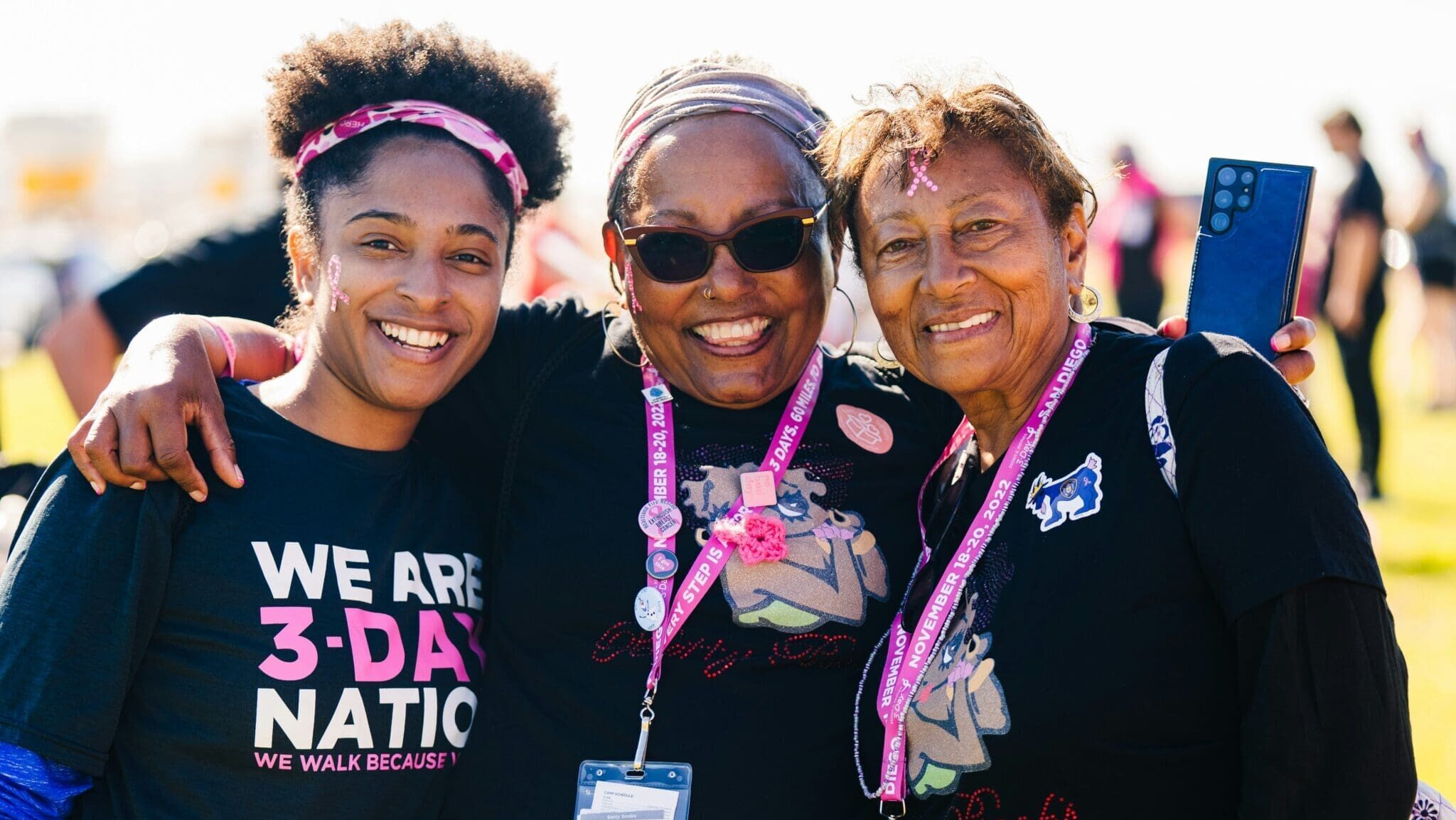
Pink ribbons are everywhere in October. The more useful question is what happens after awareness: Do you know when to begin screening, what changes deserve attention and where to turn if cost or a diagnosis becomes a barrier?
Breast health is personal, and recommendations are not identical across every medical organization. That makes a conversation with your healthcare provider especially important—one grounded in your age, family history, breast density, previous biopsies and other risk factors.
When Should Screening Begin?
For women at average risk, the U.S. Preventive Services Task Force recommends a mammogram every two years from ages 40 through 74. The American Cancer Society offers a somewhat different schedule: women ages 40 to 44 may choose annual screening; those 45 to 54 should receive a mammogram every year; and women 55 and older may continue annually or switch to every other year while they remain in good health.
Those schedules are designed for average-risk patients. Women with a known BRCA1 or BRCA2 gene change, a strong family history, previous chest radiation at a young age or certain other risk factors may need earlier or additional screening. The ACS recommends that some women at high risk receive both a mammogram and breast MRI every year, typically beginning at age 30. A clinician or genetic counselor can help determine which guidance fits your circumstances.
Know What Is Normal for You
A mammogram is a screening test, not a reason to wait when something changes. The Centers for Disease Control and Prevention advises contacting a healthcare provider about a new lump in the breast or underarm; swelling or thickening; skin irritation, redness, flaking or dimpling; nipple pain or discharge; a nipple pulling inward; or a change in breast size or shape. Breast pain can also warrant evaluation. Many breast changes are not cancer, but they still deserve prompt attention.
If your mammogram report says you have dense breasts, ask what that means for you. Dense tissue can make cancer harder to see on a mammogram and is associated with higher breast-cancer risk. The USPSTF says evidence is not yet sufficient to recommend supplemental ultrasound or MRI for every woman with dense breasts, so follow-up decisions should be individualized.
Why the Conversation Is Especially Important for Black Women
The numbers reveal an inequity that awareness campaigns cannot solve by themselves. According to the USPSTF, Black women are approximately 40% more likely to die from breast cancer than White women. They are also more likely to be diagnosed beyond stage 1 and to develop triple-negative breast cancer, an aggressive form with fewer treatment targets. The CDC reports that triple-negative breast cancer is more often diagnosed at a younger age in Black women than in White women.
Beginning screening at 40 is an important baseline, but timely follow-up after an abnormal mammogram matters just as much. Ask when results will arrive, who will contact you and what the next step will be if additional imaging or a biopsy is recommended. If your family has a history of breast, ovarian, pancreatic or prostate cancer, bring that information to the appointment and ask whether a formal risk assessment or genetic counseling is appropriate.
Bay Area Screening and Support Resources
- Every Woman Counts: California’s program provides free breast and cervical cancer screening, diagnostic services and treatment referrals to eligible low-income residents who are uninsured or underinsured. Its website includes a provider finder.
- Sister to Sister: The Women’s Cancer Resource Center in Berkeley offers Black women a twice-monthly support group, cancer-education workshops, wellness programs and community outreach. Call 510-809-0212 to join.
- Bay Area Cancer Connections: The organization supports people affected by breast or ovarian cancer through personalized information, programs and support groups, including a virtual group for BIPOC participants. Call its helpline at 650-326-6686.
- Shanti Cancer Program: San Francisco adults diagnosed with cancer can receive free, confidential care navigation and practical and emotional support. Services are available in multiple languages. Call 415-674-4770.
The takeaway goes beyond wearing pink: know your risk, keep track of your screening schedule, pay attention to changes and insist on clear follow-up. One appointment—or one question asked at the right time—can move awareness into action.
This article is for general information and is not a substitute for medical advice, diagnosis or treatment. Consult a qualified healthcare professional about your individual risk and screening plan.
Sources and Resources
- U.S. Preventive Services Task Force: Breast Cancer Screening
- American Cancer Society: Recommendations for the Early Detection of Breast Cancer
- Centers for Disease Control and Prevention: Symptoms of Breast Cancer
- Centers for Disease Control and Prevention: About Breast Cancer
- California Department of Health Care Services: Every Woman Counts
- Women’s Cancer Resource Center: Sister to Sister
- Bay Area Cancer Connections
- Shanti Cancer Program
Featured image: Klaus Nielsen/Pexels.