



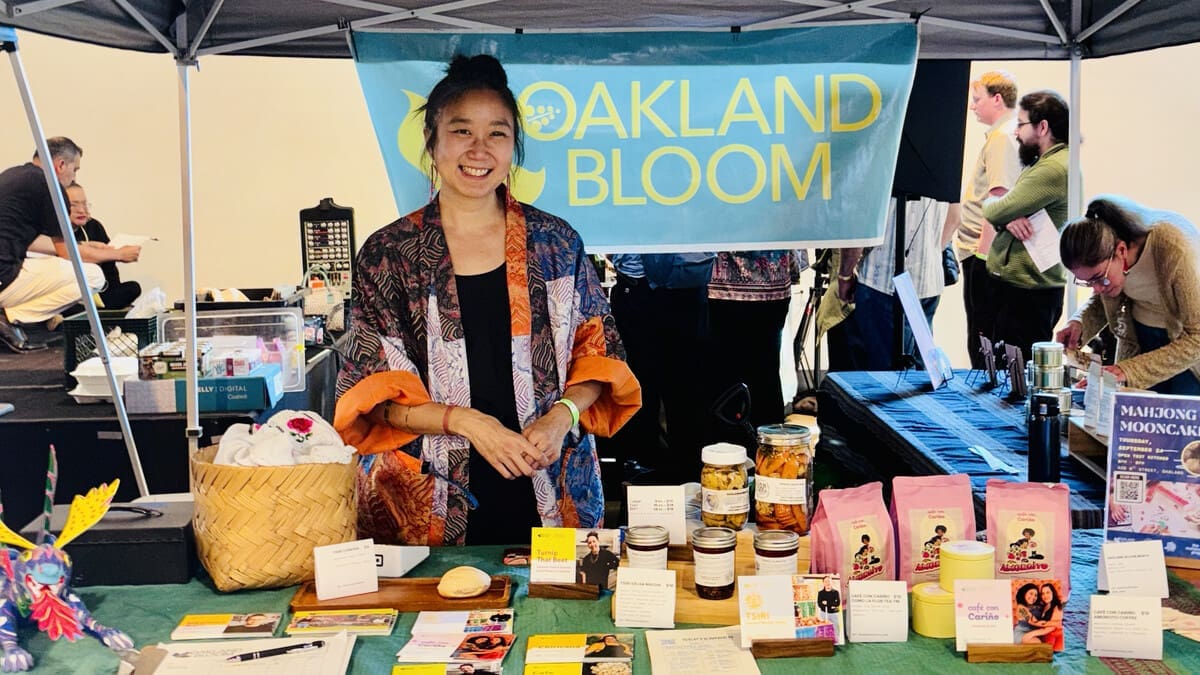
Event: The Edible Atlas: A Global Street Eats Festival
Date: September 19, 2026
Location: Bloc15, Oakland
Photos: Courtney Smikle
There are worse ways to spend a Saturday afternoon than eating your way around the world without ever leaving Oakland. On Saturday, September 19, KQED invited food lovers to do just that at The Edible Atlas: A Global Street Eats Festival, celebrating the flavors, traditions and stories that make the Bay Area such an extraordinary place to eat.
Courtney and I arrived around 12:30 p.m., culinary-curious and ready to explore. As a classically trained chef, however, I apparently don’t know how to simply walk past a cooking demonstration. Within minutes, I spotted Chef Marlene of TSIRI preparing salsa macha as part of Oakland Bloom’s chef-led programming.
So naturally, I stopped.
Before my first bite, I was already doing what chefs do: watching hands, ingredients and technique.
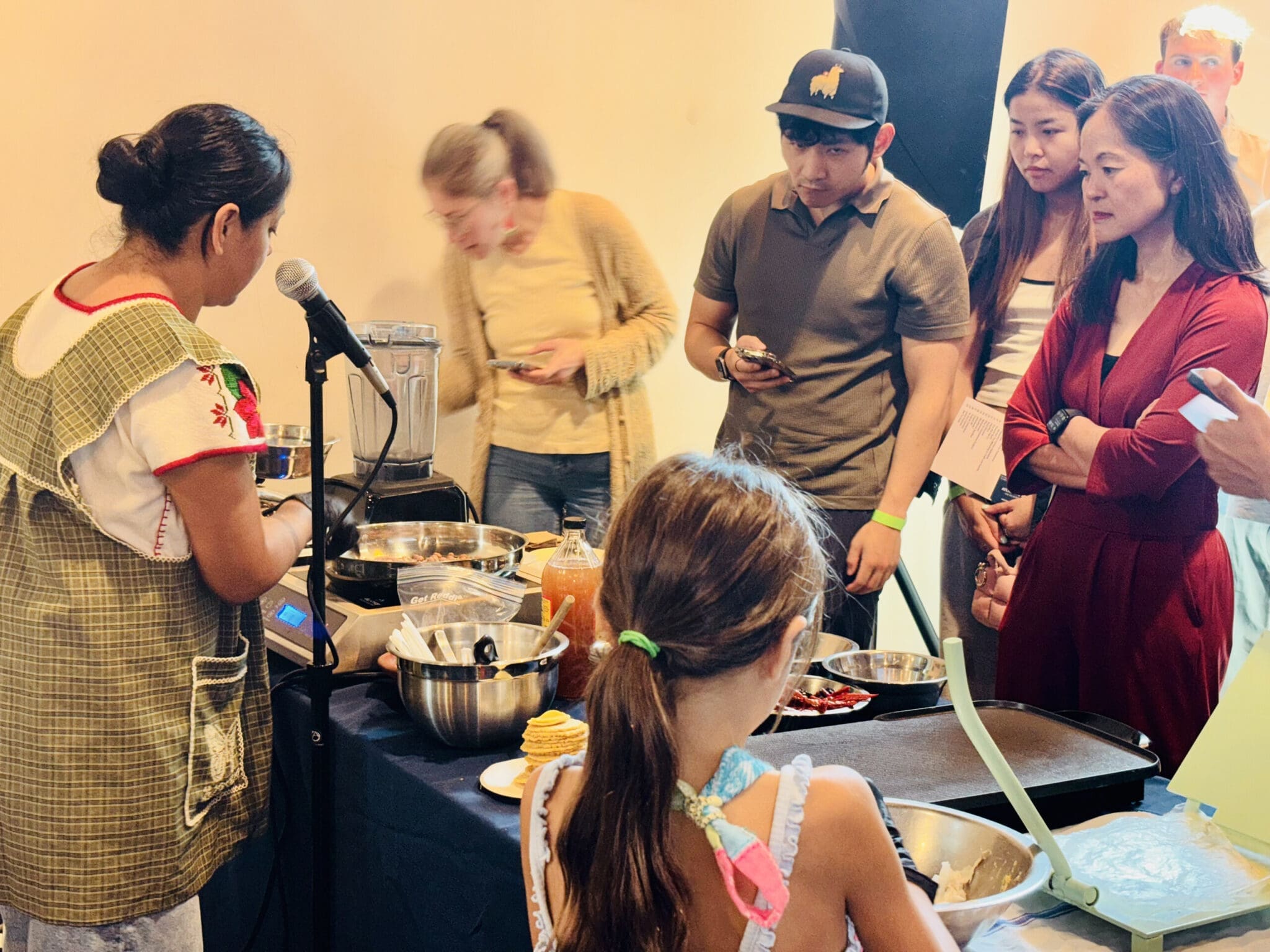
Conveniently—or dangerously, depending on the status of your pantry—Oakland Bloom’s marketplace was right next door, filled with products from immigrant and diaspora chef-entrepreneurs, including jars of that very salsa macha. My first clue that this wasn’t merely a food festival: the people behind the food—and their traditions, migrations, memories and businesses—were very much part of the menu.
And then came my first bite.
When an Oyster Mushroom Makes You Stop Talking
At That Hausa Vegan, chef Sital Muktari offered us an oyster mushroom generously seasoned with traditional suya spice. Now, I know an oyster mushroom. But this one?
Deeply browned, smoky, savory and surprisingly substantial, its texture immediately reminded me of smoked chicken. The suya brought warmth and complexity, and suddenly I had questions. First among them: What exactly is Hausa?
I’d heard something familiar in the name—almost a playful spin on “house.” Instead, Sital explained that Hausa refers to a people and culture with deep roots in West Africa, particularly northern Nigeria, where she spent much of her youth immersed in her family’s heritage. One bite had opened a door.
Courtney was doing some cultural connecting of his own. His Jamaican sensibilities recognized hibiscus tea as an old friend: sorrel, as he knows it. And we didn’t leave empty-handed. A bottle of That Hausa Vegan’s house-made sauce came home with us. This was becoming interesting.
When Something New Tastes Strangely Familiar
One of my favorite bites came from Sisters Catering & Events. I’d never eaten Afghan food, so I approached their mantoo, traditional Afghan dumplings, without a reference point.
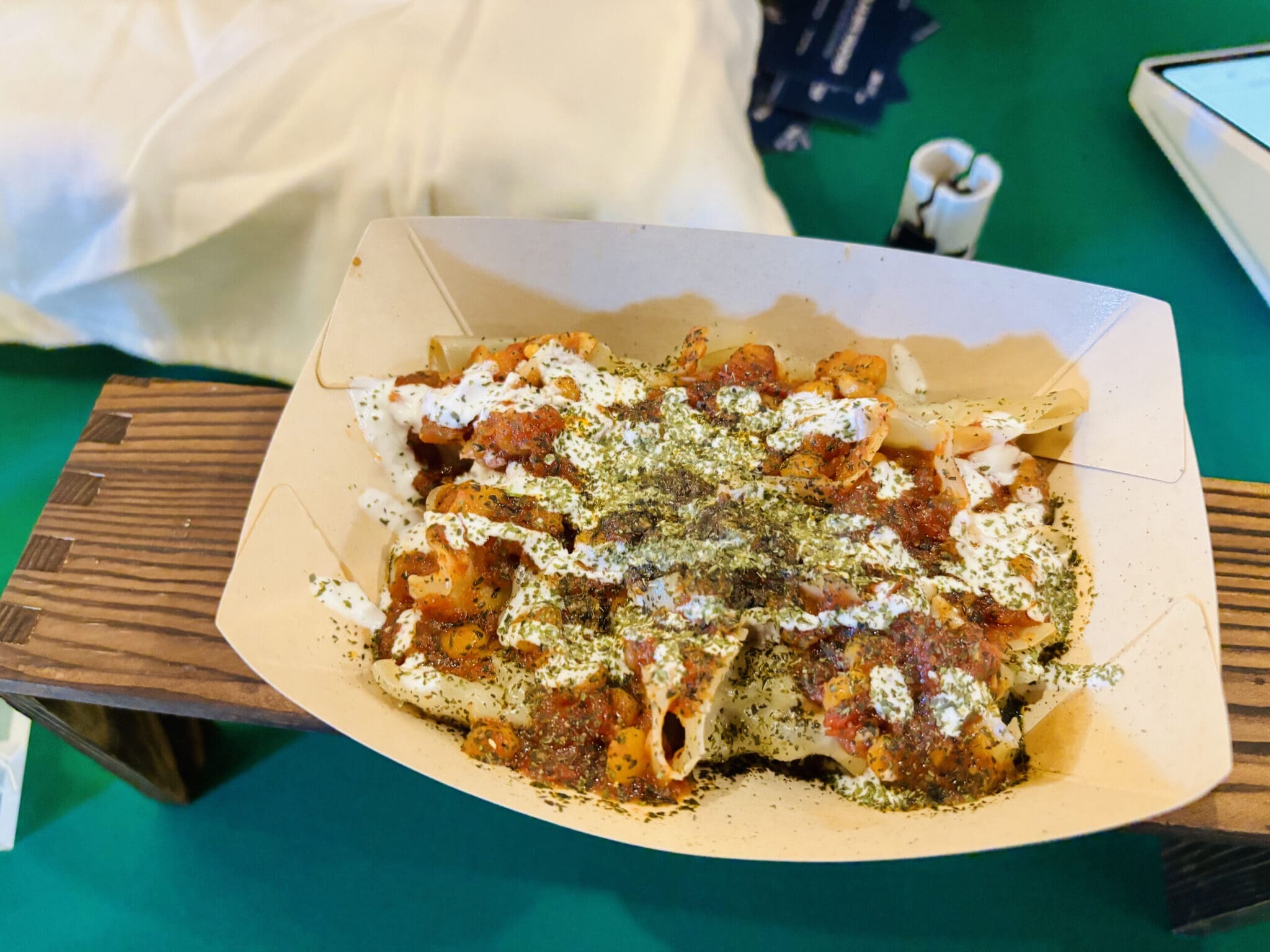
Yet something about the flavor immediately felt familiar. My chef brain went straight to Italian ragù. The chef and owner smiled at the comparison and assured me I wasn’t completely off base. As we talked, the connection made sense: savory ground meat and onion, tomato, warm spices and a creamy counterpoint from yogurt—all wrapped in or layered over starch. Different traditions, ingredients and techniques, but remarkably familiar instincts about comfort and flavor.
Then she mentioned crushing fresh coriander seed for her mantoo. Aha. There were those floral notes I’d been trying to identify.
That exchange became one of my favorite moments. I hadn’t discovered that Afghan mantoo was like Italian ragù. I’d discovered something far more interesting: two culinary traditions from different parts of the world could arrive at some of the same ideas about what tastes comforting and delicious.
And then there was the rosewater lemonade—fragrant, refreshing and completely unexpected. Yes, please.
Familiar Faces, Caribbean Flavor
Not every stop was a first encounter. Some felt like greeting old friends, including Cocobreeze Caribbean Restaurant. Courtney and I first experienced it around the time it opened six years ago, through Cathy Adams, President and CEO of the Oakland African American Chamber of Commerce. At that beautifully vibrant booth, we already knew what those folks could do in a kitchen. We didn’t need convincing.
We tried their spicy pineapple chow: fresh pineapple with herbs, seasonings and Scotch Bonnet pepper sauce. Sweet. Fresh. Herbaceous.
And then that Scotch Bonnet shows up to remind you it was invited to the party too.
For Courtney, it connected him to the Caribbean flavors he knows so well. For me, it was another reminder that exploring an atlas doesn’t always mean discovering someplace new. Sometimes it means recognizing home.
Can You Name That Green?
I’d met Phyllis of Sankofa Urban Farms a few weeks earlier at Black Vines’ summer wine-tasting series in Oakland—an encounter that helped lead me to Edible Atlas. At Edible Atlas, she was every bit as charismatic and passionate as I remembered.
Rather than simply talking about growing food, Phyllis put the audience to work, holding up greens and challenging guests to identify purple tree collards, Georgia Southern collards, Siberian kale and Swiss chard.
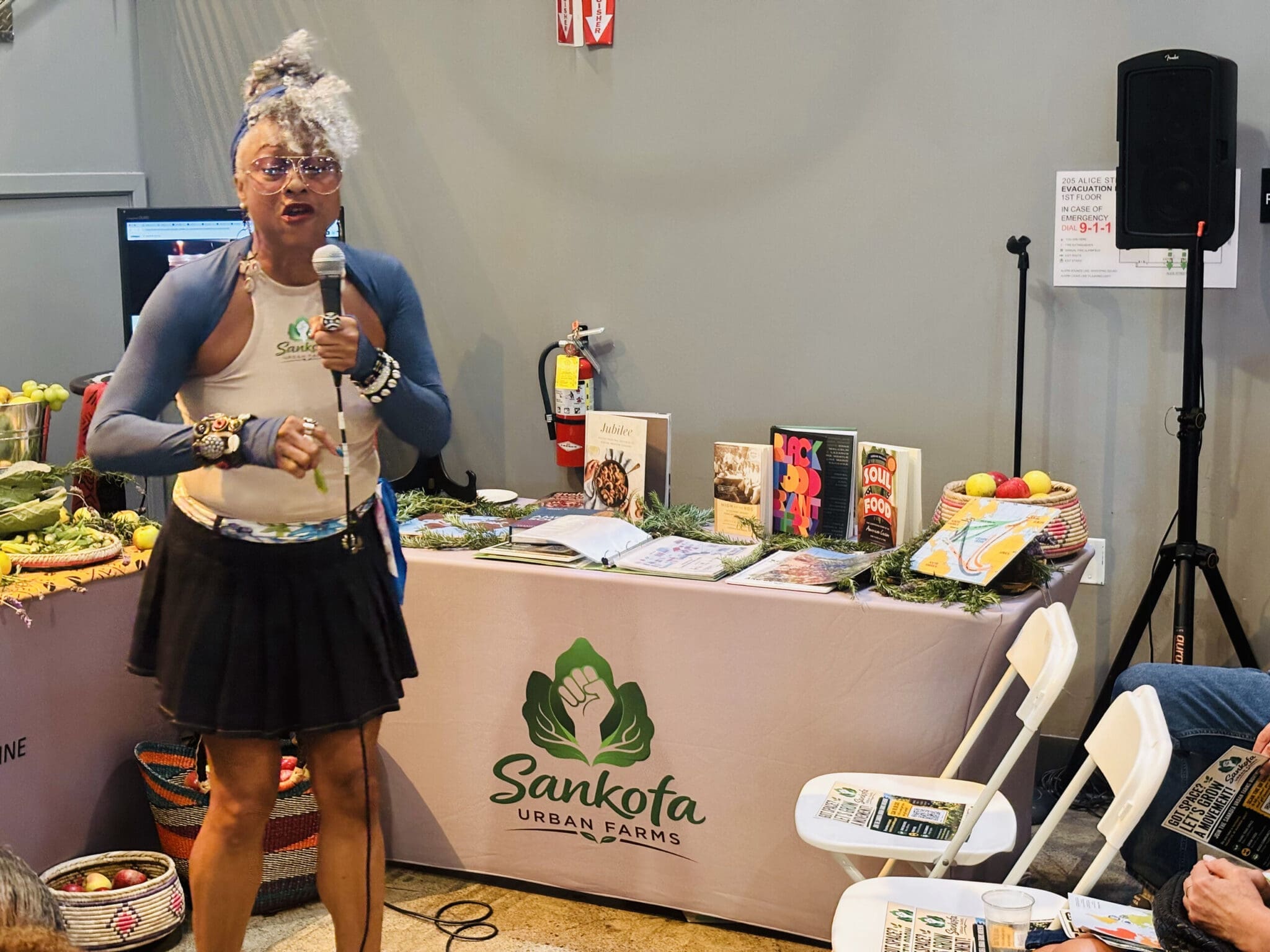
And we certainly cannot leave out the fresh okra. This chef was paying attention.
Her larger message: understand what you eat, where it comes from and, when possible, grow some yourself. She connected growing food with healthier people, stronger communities and greater self-sufficiency. At an event exploring where our food comes from culturally, Phyllis offered another important answer:
The ground.
Artistry, Passed Down
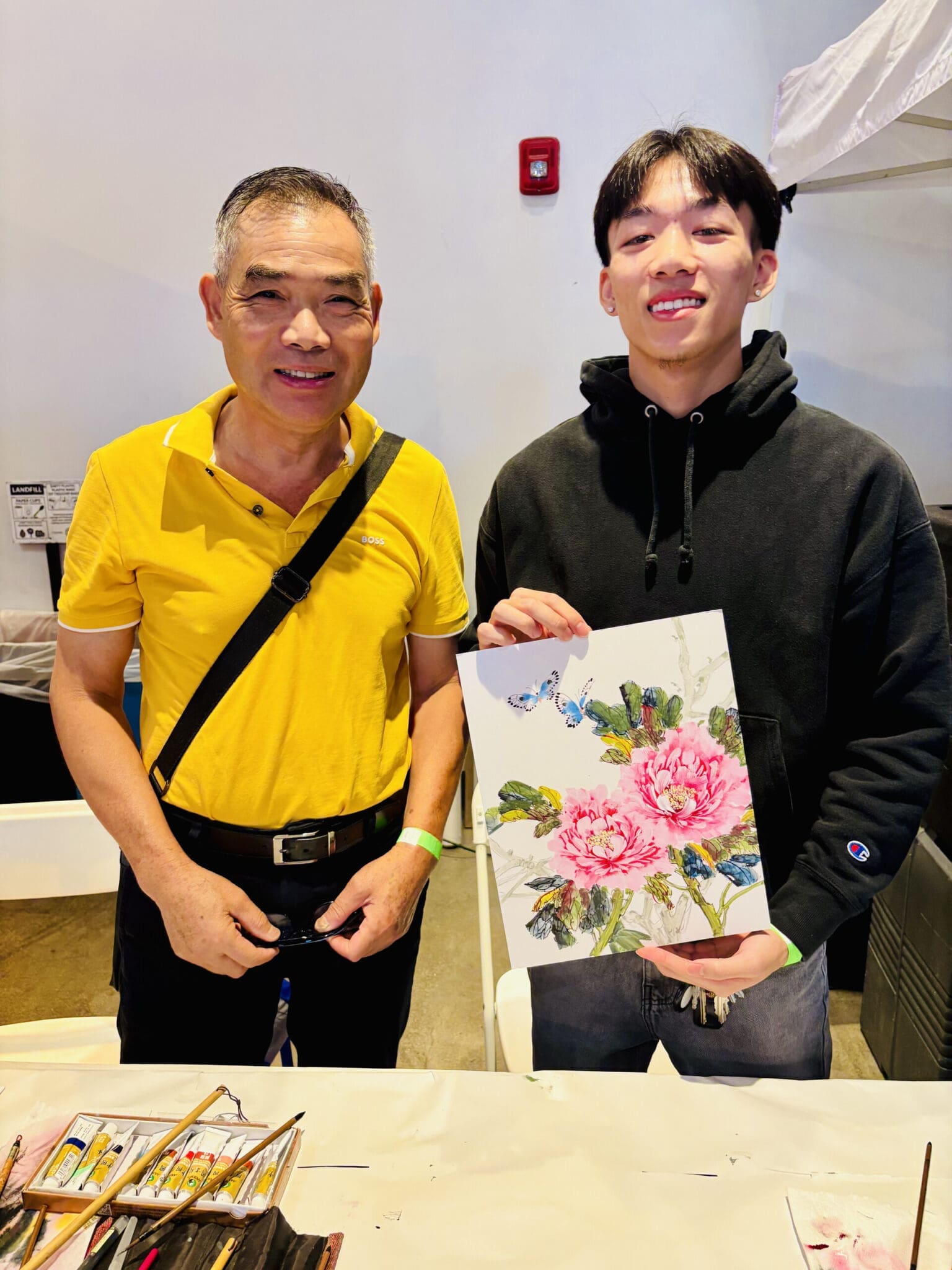
At Creek House Dim Sum, another kind of artistry caught my attention: a father and son, both artists and part of the Creek House family, sitting nearby. Vincent Chen told me his father taught him to draw freehand.
He showed me a recent floral work they’d created together, his father freely styling the butterfly, and shared plans to monetize his artistic gift after college. Nearby was a World Peace and Harmony Award recognizing Vincent’s achievements and contributions to global harmony and sustainable development.
What stayed with me was the lineage: a father teaching his son by hand. Watching them work felt wonderfully familiar. Culinary artistry is passed along much the same way—through observation, repetition, instinct and somebody showing you what their hands already know.
Different canvas. Same inheritance.
An Atlas You Could Actually Travel
KQED didn’t leave the “atlas” concept to the imagination. Guests received colorful world maps to chart their culinary journey. Taste an Atlas Bite. Scan the QR code to discover the story behind it. Find its place on the map. Get stamped. Keep it moving.
Courtney and I collected stamps across our own Atlas before three hours of delicious sensory overload—and another commitment—caught up with us. There were also prerecorded stories from participating vendors we never managed to explore. That probably tells you how much was happening: aromas from every direction, cooking demonstrations, conversations, vendors, products, music, food. Even an enthusiastic foodie had to surrender eventually.
Creek House Dim Sum—located in Walnut Creek; I see what you did there—provided one of our lighter discoveries. Their extra-large shu mai was chock-full of deliciousness. Apparently they believe in souvenirs, too, because we left with an adorable little dumpling pen.
Food and a cute pen? No complaints here.
The Town Was Outside, Too
After several hours of indoor tastings, demonstrations and conversations, we stepped outside. The energy hadn’t ended; it had simply changed form. Food trucks and tents lined the space. People gathered around tables. Music and conversation moved through the crowd. The scene felt unmistakably Oakland.
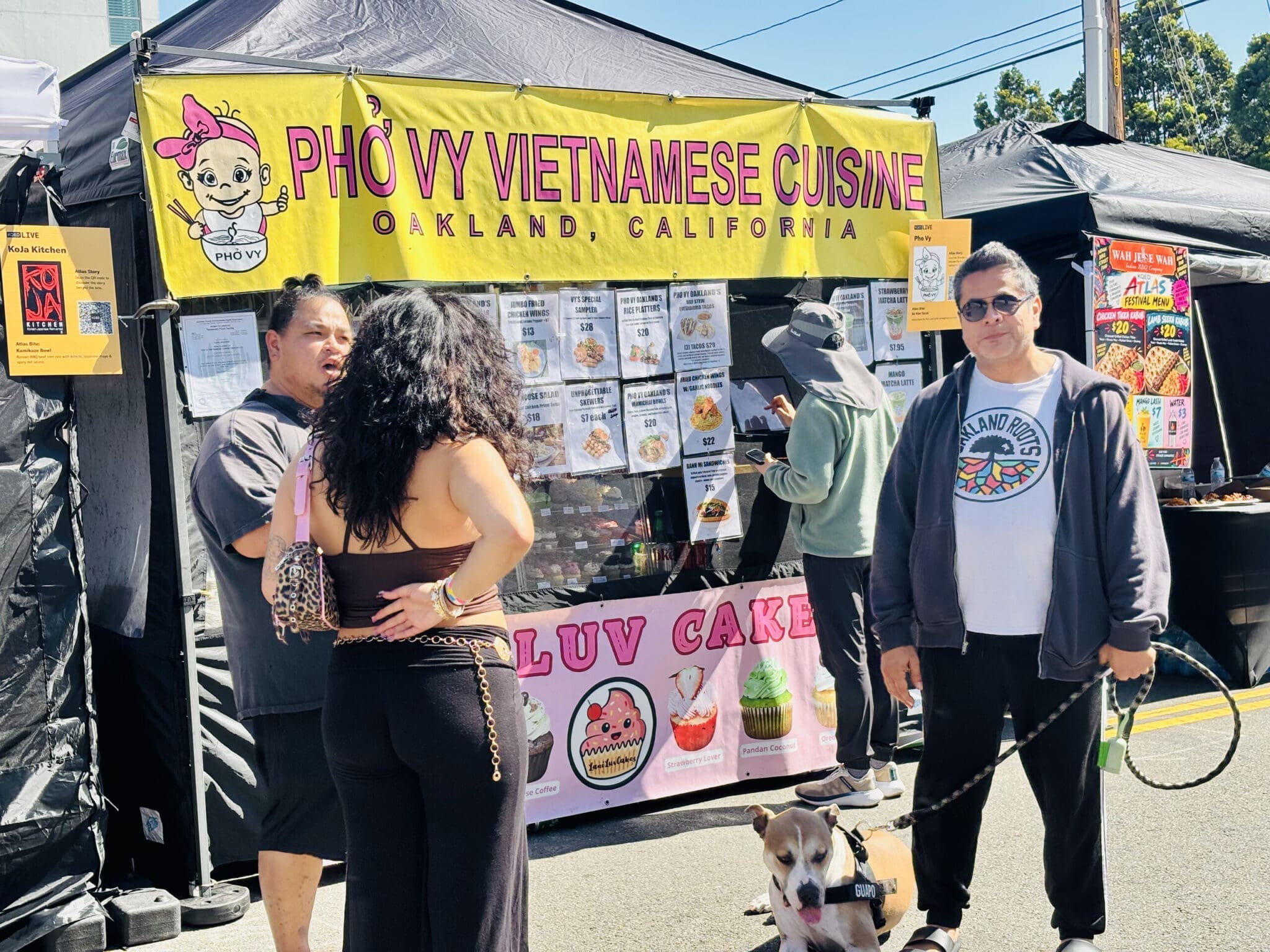
Almost immediately, I raised my camera. A festivalgoer wore an Oakland Roots soccer shirt, his dog resting comfortably at his feet. I couldn’t have staged a more effortlessly Oakland image if I’d tried.
I also ran into my friend Lena and her friend. Their tickets were for the outdoor festivities, so naturally I started telling them about everything we’d been tasting and discovering inside. Already pleasantly surprised by the variety of African foods outside, Lena wondered why there wasn’t a place to regularly experience that breadth of African cuisines together under one roof.
It was a good question. Edible Atlas wasn’t creating these food cultures. For one afternoon, it was putting a spotlight on people who are already here.
Sometimes You Wear the Connection
Food wasn’t the only thing producing moments of recognition. I wandered over to the Cowrie Collective booth wearing earrings I’d purchased from the collective during a Juneteenth celebration earlier this year.
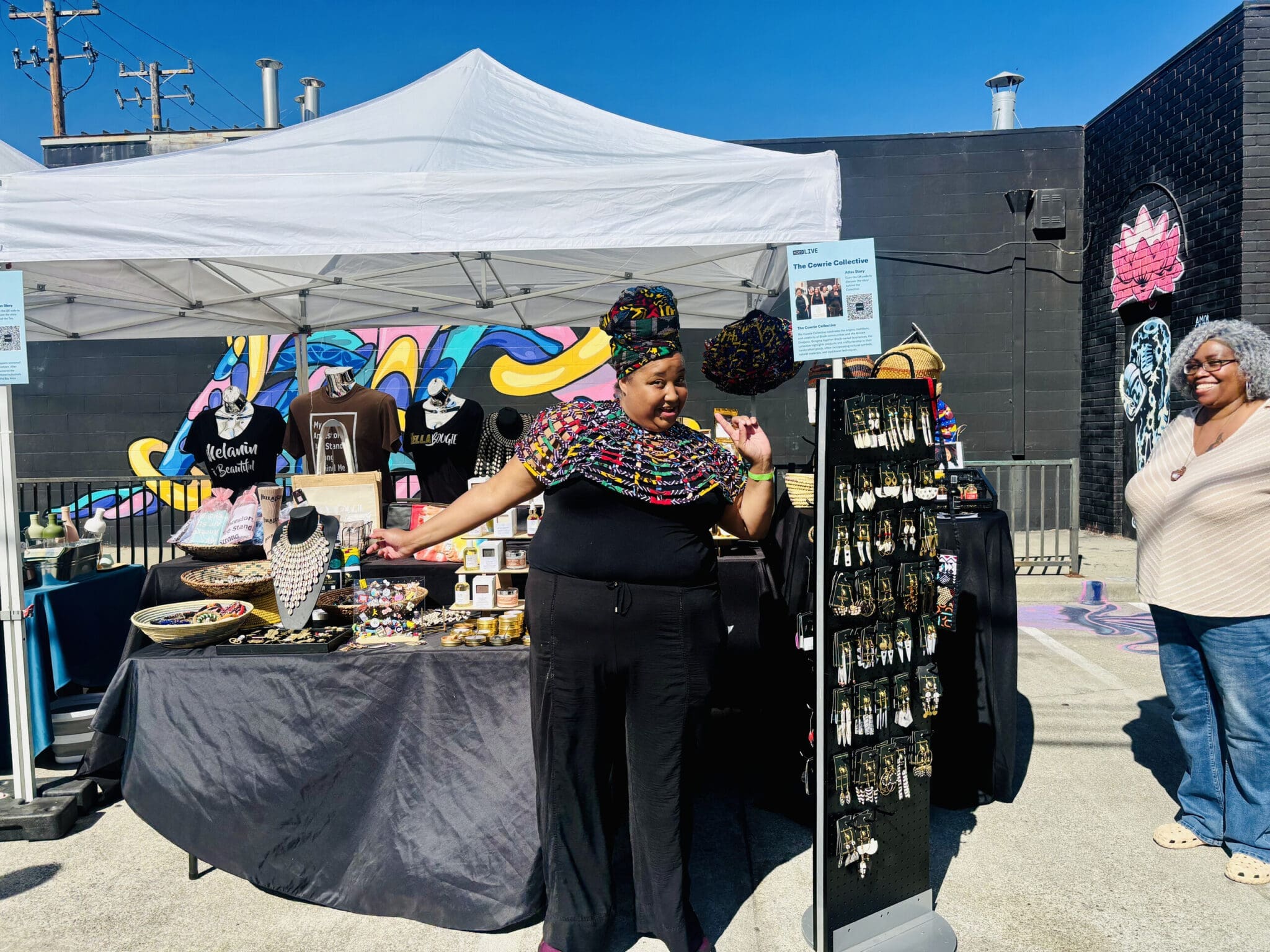
The owner noticed. She seemed genuinely delighted to see her merchandise out in the world and asked me to pose for a photograph she planned to share on social media. Of course I said yes.
That’s Oakland, too. Sometimes you’re introduced to a local entrepreneur. Sometimes you encounter their work again. And sometimes you show up already wearing it.
One Last Bite—and a Family Memory
By 3:30, Courtney and I needed to leave for another commitment. But apparently the culinary universe had one final assignment for me: Cali Sweet Cakes. Owner and baker Ricquel Thomas was serving a giant slice of her family’s Sock-It-to-Me cake. Before I tasted it, I smelled it.
Cinnamon. Plenty of it.
Ricquel told me it came from a family recipe she hopes to keep sharing for a long time. That stopped me in a different way. Some recipes in my own family have been captured and preserved. Others weren’t.
My paternal grandfather’s hog head cheese is one of them. He knew how to make it. We remember it. But without his recipe, what remains is largely our interpretation. Chef to chef, that matters to me.
Recipes aren’t merely instructions for producing food. They can carry the fingerprints of people who aren’t standing in the kitchen anymore—a measurement scribbled on a card, a technique somebody teaches you by hand, or that maddening family instruction to add an ingredient “until it looks right.” Those things become part of what one generation leaves another.
Suddenly, that giant slice of Sock-It-to-Me cake wasn’t simply dessert.
It was inheritance.
Hella Oakland. Hella Flavor.
Courtney and I left encouraged by the stories shared, memories provoked and tasty bites we had the privilege of enjoying. For three hours, we were simply pedestrians and culinary-curious Oakland residents, following our senses. And they led us remarkably far.
Across countries, continents and generations, sometimes the connection was geographic. Sometimes it was ancestral. And sometimes an unfamiliar flavor reminded us of something we’d known all our lives. That’s what stayed with me.
The Oakland Bay Area should never be overlooked as the food mecca that it is. Its richness isn’t simply the number of cuisines represented. It’s in the place-based people behind the food—the farmers, cooks, immigrants, descendants, entrepreneurs and community builders who grow it, preserve it, reinterpret it and share it. Each offers us a doorway into somewhere else.
KQED called the afternoon The Edible Atlas. After three delicious hours traveling the world without leaving The Town, I’d say they got the name just about right.
And we barely scratched the surface.