



By BAR Editorial Staff
Community Pulse examines identifiable community concerns through dated reporting, public accounts and civic context. Its levels describe the evidence reviewed, not representative polling or what all Oakland residents believe. Today’s lead incorporates reporting updated October 24; the ongoing topics retain their original reporting dates.
TODAY IN COMMUNITY PULSE
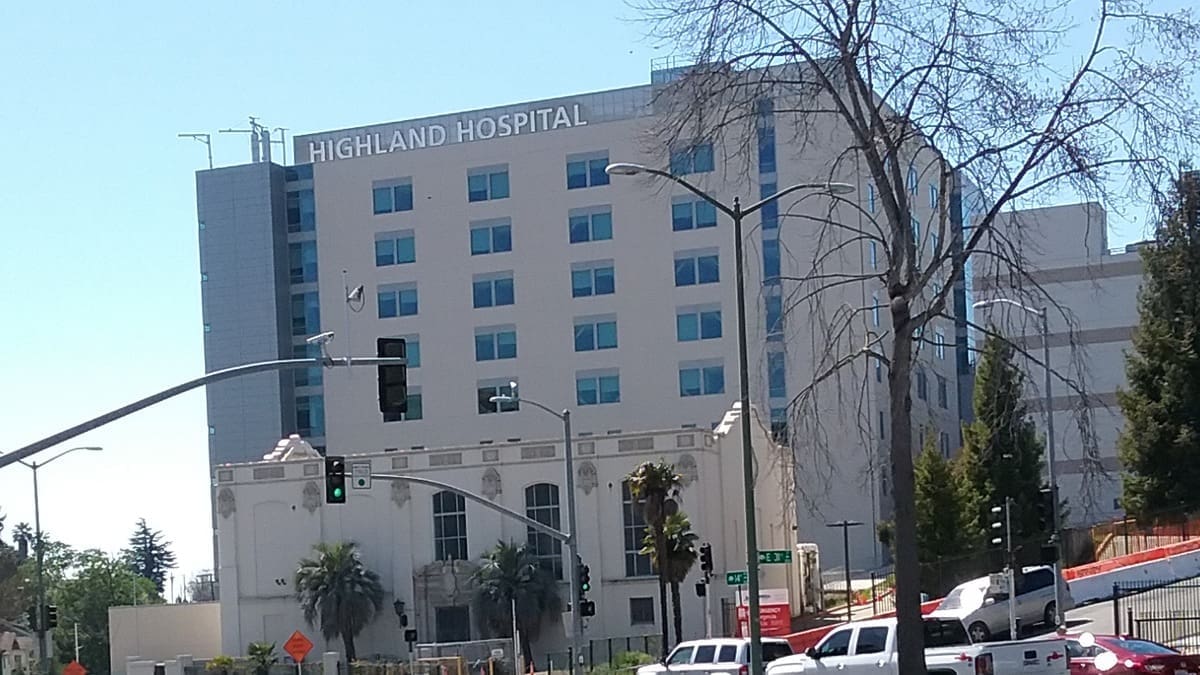
1 HIGHLAND PATIENT TRUST AND IMMIGRATION CUSTODY
Pulse level: LOW — localized evidence
Sentiment: Negative — concern about patient protections and institutional accountability
What people seem to be asking: What protections apply when someone in immigration custody needs hospital care?
KALW’s October 19 reporting documented protesters outside Highland Hospital. KQED’s October 23 report, updated October 24, adds staff concerns about immigration-response training and community demands for accountability. These accounts identify particular participants and employees, rather than a citywide position.
Reality check: KQED reports that AHS said Friday that no Highland patients were in ICE custody and no ICE personnel remained on the property. AHS also described training and response procedures; interviewed employees questioned their adequacy. Those disagreements do not establish a legal finding or Sunday’s custody status.
Why it matters: Clear, understandable procedures matter to patients seeking care, families seeking information and employees responding to custody situations.
Dated evidence: KALW, October 19; KQED, October 23, updated October 24.
ONGOING PULSE
2 TRANSIT ESSENTIAL TRIPS AND HOUSEHOLD COSTS
Pulse level: MODERATE
Sentiment: Mixed — concern about access alongside opposition to higher taxes
What people seem to be asking: How can essential bus connections be protected while keeping household costs manageable?
October 16 reporting from KQED and Oakland North documents riders’ concerns about medical appointments, work trips and weekend connections. Oakland North also reports a taxpayer organization’s opposition to the proposed tax increase. The reports cover overlapping public discussion; they are not separate representative samples.
Reality check: AC Transit’s contingency-plan page, checked October 25, says the draft comment period is closed. If reductions are needed, the board would consider a proposed final plan December 9, 2026, with reductions beginning in June 2027. These are conditional future changes, not cuts taking effect today.
Why it matters: The debate connects transportation access with household affordability. For riders with limited alternatives, a lost connection can affect much more than a commute.
Dated evidence: KQED, October 16; Oakland North, October 16; AC Transit contingency plan, checked October 25.
3 PORT TRUCKERS WHEN A LOAD BARELY COVERS ITS COST
Pulse level: LOW — limited to identified drivers and industry voices
Sentiment: Negative — financial pressure and uncertainty
What people seem to be asking: Can independent drivers earn enough from a load after paying operating expenses?
KQED’s report published October 21 describes drivers working with one carrier who say fuel, insurance and other expenses are squeezing their earnings. Oakland resident Martin Ramirez described having less money left after those costs; another driver, Danny Bui, described struggling to cover operating costs.
Reality check: These are dated accounts from particular workers, not evidence of a portwide consensus, a Sunday fuel-price reading or a new work stoppage. No verified development supports increasing the assessed intensity today.
Why it matters: For independent drivers, operating costs determine what remains for household expenses and whether continuing the work is financially sustainable.
Dated evidence: KQED, October 21.
4 SHARED SPACES KEEPING NEIGHBORHOODS CLEAN AND WELCOMING
Pulse level: LOW — localized, dated evidence
Sentiment: Mixed — frustration about recurring problems alongside constructive stewardship
What people seem to be asking: How can neighbors keep shared spaces clean, welcoming and safe?
KPIX’s October 16 reporting, carried by KION, documents particular residents’ and business owners’ concerns about dumping and conditions around the Alameda Avenue lot. KPIX and KION represent one reporting origin, not independent corroboration.
Separately, Oakland Voices’ October 8 report describes September 19 volunteers caring for parks, shorelines and waterways. Participants connected that work with neighborhood belonging and making public places welcoming.
Reality check: These accounts concern different locations and groups. They do not establish the Alameda Avenue lot’s condition today, whether its planned cleanup occurred, lasting improvement or citywide consensus. The assessment remains LOW/Mixed; no verified evidence supports an increase in intensity.
Why it matters: Maintaining shared places affects nearby households, businesses and volunteers. These accounts illustrate both frustration with recurring problems and residents’ willingness to contribute to their neighborhoods.
Dated evidence: KPIX via KION, October 16 — one reporting origin; Oakland Voices, October 8, describing September 19.
— prepared by BAR Editorial Staff