



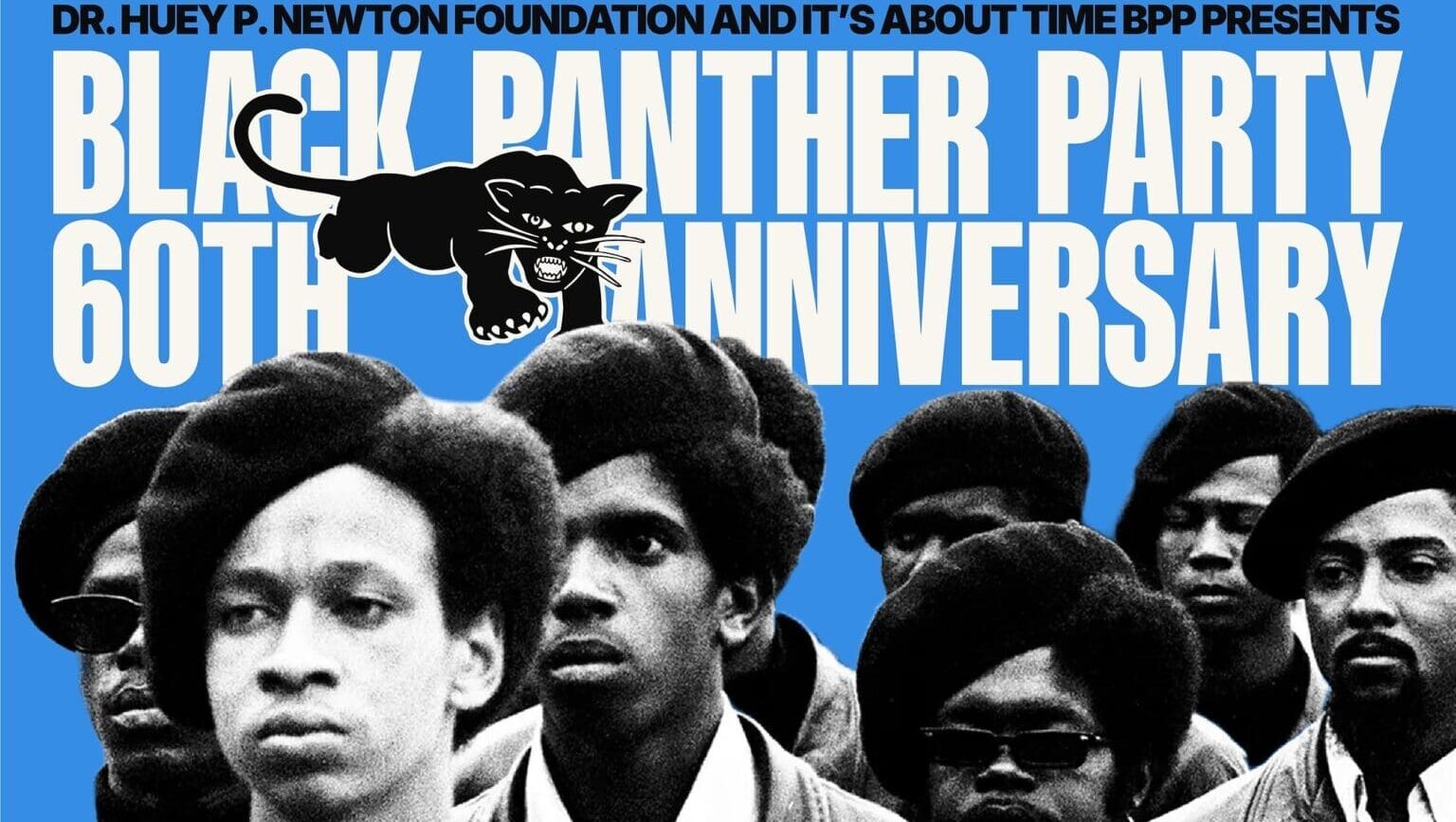
From free breakfasts and neighborhood health care to a weekend of music, memory and public recognition, Oakland is revisiting a movement whose questions about power still resonate.
Sixty years after Huey P. Newton and Bobby Seale founded the Black Panther Party in Oakland, the city is marking the anniversary in the places where history becomes personal: a library, a neighborhood park, a museum, a downtown street. The October 15–18 celebration brings together former Panthers, their families, artists, scholars and younger organizers to remember what the party built—and consider what remains unfinished.
The familiar images are powerful: black berets, leather jackets, raised fists. But an anniversary worthy of Oakland must also make room for the people who arrived early to cook breakfast, staffed health programs, taught children and kept neighborhood offices running. Those daily acts of service help explain why the party remains part of the Bay Area’s living civic memory.
Why Oakland Is at the Center
Oakland is more than the host city. It is the party’s birthplace and the community in which Newton and Seale developed a political response to racism, economic inequality and police violence. Founded in October 1966, the Black Panther Party for Self-Defense combined a demand for Black self-determination with an insistence that residents had a right to challenge the institutions exercising power over their lives.
Its early armed patrols monitored police encounters. Its later national visibility often eclipsed the local work that sustained it. The anniversary brings those scales together: a movement that traveled far beyond California, rooted in particular Oakland streets, congregations, classrooms and families.
Preserving those places is part of the work now. ABC7’s anniversary reporting highlights efforts to protect historic Panther sites, including the former party office near Peralta and 11th streets and the church associated with the first free breakfast program. Buildings can disappear even while a movement’s image becomes more famous. Preservation helps keep the people and neighborhood relationships behind that image in view.
What the Panthers Stood For

The Panthers’ politics went beyond representation. They argued that Black communities should have power over their own conditions: work, housing, education, safety and the distribution of resources. Their Ten-Point Program made those demands concrete, connecting freedom to the material requirements of everyday life.
The program evolved. The Dr. Huey P. Newton Foundation reproduces the 1972 version, which calls for employment or a guaranteed income, decent housing, education that teaches Black history, free health care, an end to police brutality and wars of aggression, and changes to the treatment of people held in prisons and jails. Reading the document itself is more useful than reducing the organization to either its clothing or its weapons.
The party drew on revolutionary socialist and Marxist ideas and linked Black liberation to struggles beyond the United States. It challenged economic exploitation as well as racial exclusion. That international outlook remains visible in the anniversary’s programming, alongside conversations about practical neighborhood care.
Its history also requires honesty about conflict. Federal surveillance and disruption, including the FBI’s COINTELPRO campaign, helped undermine the organization. Internal divisions and violence also damaged it. Recognizing the Panthers’ public service does not require treating every leader or action as beyond criticism. A serious commemoration can hold the achievements and the difficult history together.
The Revolution Also Served Breakfast
One of the party’s most enduring contributions began with a basic proposition: children should not have to learn while hungry. Its free breakfast program started in Oakland in 1969 at St. Augustine’s Episcopal Church. Volunteers gathered food, prepared meals and served children before school. The work made a political argument through something immediately useful.
The Panthers did not invent the federal school breakfast program; a federal pilot already existed in 1966. Their contribution was to demonstrate community capacity, expose unmet need and press the larger question of why feeding children was not treated as a public obligation. HISTORY’s account describes how their breakfast work spread and helped build pressure for broader access.
Food was one part of a larger network of survival programs. Health services and sickle cell screening addressed needs that established institutions had failed to meet. Education and other community programs treated survival as a collective responsibility, not a private problem for struggling families to solve alone.
Some of that work outlasted the organization. The Associated Press traces Seattle’s Carolyn Downs Family Medical Center to a clinic established by the local Panthers in 1969. Its continuing work is a concrete reminder that the party’s legacy is not confined to photographs or anniversary speeches.
There is a lesson here about whose labor gets remembered. A history organized only around famous male leaders can miss the members—especially women—whose organizing made everyday services possible. The anniversary’s attention to rank-and-file members helps shift the focus from a handful of recognizable faces to the people who sustained the work.
Elaine Brown and the Women Who Led
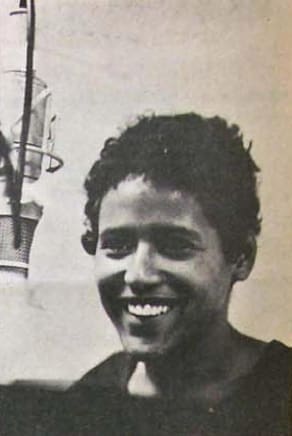
Elaine Brown’s leadership belongs at the center of this history. She chaired the Black Panther Party from 1974 to 1977, becoming the first woman to lead the organization. Her work connected community programs with electoral organizing in Oakland, including support for Lionel Wilson’s successful campaign to become the city’s first Black mayor. Before becoming chairwoman, Brown helped establish the Los Angeles chapter’s free breakfast, prison transportation and legal aid programs and served as the party’s minister of information.
Women also shaped the party’s educational vision. Ericka Huggins directed the Oakland Community School from 1973 to 1981, working with fellow Panthers and local educators to develop its curriculum. Across the organization, women cooked and coordinated meals, taught children, organized neighborhoods and exercised political leadership. Remembering Brown, Huggins and the many women whose names are less widely known makes the anniversary’s story more complete: women helped define the party’s priorities and put its ideas into practice.
Huey Newton’s Death and the Work of Remembering

Newton was murdered in West Oakland in 1989. His death was a profound loss to the people who knew him and to a movement whose public identity remained closely tied to him. It should not be confused with the end of the party itself, which had dissolved earlier, in 1982.
Nor should his killing be casually described as a political assassination. Reporting identifies the killer as a gang member; that is a different claim from saying Newton was killed in an organized government operation. The distinction matters, particularly in a history that already contains documented state repression.
Newton’s later life was troubled, and his legacy cannot be understood through either sainthood or a single tragic ending. His significance lies in the ideas he helped formulate, the institution he helped build and the people who carried its community work forward. KQED’s anniversary account also describes the lingering pain of the rupture between Newton and Seale, including Seale’s regret that they did not reconcile before Newton’s death.
Today, the Newton memorial in West Oakland and the work of the foundation bearing his name give that history a public presence. The anniversary is an opportunity to encounter him as a consequential, complicated human being—and to recognize that the party’s story belongs to more people than its cofounders.
A Celebration Already Under Way
The anniversary is a four-day gathering, not simply a weekend gala. The official program places public remembrance alongside conference sessions, art, film and music. The Dr. Huey P. Newton Foundation and It’s About Time Black Panther Party organize the gathering, with participation from the Bobby Seale Legacy Foundation.
Thursday, October 15, was the opening day. The published schedule paired a rank-and-file exhibit reception and discussion at the Oakland Main Library, 5–7:30 p.m., with the anniversary edition of Oaktown Thursdays at Latham Square, 5–10 p.m. The library program included a short film and a panel hosted by Panther historian Billy X Jennings. These earlier programs belong in the anniversary’s story, alongside the events still ahead.
Friday, October 16, opens the conference at the California Ballroom, 1736 Franklin Street, with an 8–10:20 a.m. plenary. Workshops continue at downtown partner spaces, including Oakstop, BAM House and Fluid 510. The program ranges across health, education, women’s leadership, international solidarity and the ways contemporary organizers adapt the party’s work.
The public schedule also includes Billy X Jennings’ Black Panther Party exhibit opening at the Alameda County Law Library on Friday, 2–4 p.m. That evening, Friday Nights at the Oakland Museum of California runs 5–9 p.m. The museum’s own listing confirms that the outdoor celebration is free; gallery admission is separate. MacArthur Maze performs 6:15–7:15 p.m., and Memories in Motion screens in the James Moore Theater 6–7 p.m.
Saturday: Public Recognition, Film and a Gala
Saturday, October 17, combines conference sessions with a visible change in Oakland’s public landscape. The official anniversary schedule reserves 11:30 a.m.–1:30 p.m. for the Black Panther Party Boulevard sign unveiling. City materials identify the commemorative stretch of Broadway between 14th and 17th streets. The designation honors the party while Broadway remains the street’s name for addresses.
The symbolism matters. A movement once routinely represented as an outside threat is being recognized in the city where it began. A street sign cannot convey all of that history, but it can prompt the question of who deserves a place in public memory—and encourage people to learn more.
Also Saturday, the official program lists the 25th-anniversary presentation of A Huey P. Newton Story at the Oakland Museum of California’s James Moore Theater, 1:45–4 p.m. The film, directed by Spike Lee from Roger Guenveur Smith’s solo performance, creates another way into Newton’s life and thinking. The program names Smith, Steven Adams, Fredrika Newton, Awele Makeba and Mayor Barbara Lee among the participants.
The anniversary gala is Saturday evening, 6–10 p.m., at the Oakland Scottish Rite Center. The organizer’s website lists conference and gala tickets as sold out. Readers should not assume that a listing in an earlier news story means admission remains available; check the organizer for current access and any changes.
The night also includes a public Black art pop-up at Akoma Oakland, 1727 Telegraph Avenue, 8–11 p.m., according to the official program. The celebration’s reach across cultural spaces is part of its character: political history is being revisited through performance, visual art and time spent together.
Sunday: Community at the Center
The closing Community Day is Sunday, October 18, noon–4 p.m., at Lil Bobby Hutton Park, 1651 Adeline Street. The official program identifies it as open to the public, with Money B of Digital Underground hosting and a lineup including the Bobby Young Project, Charlotte O’Neal, DJ JR, Numskull of the Luniz and the WolfHawk Jaguar Band.
Music, speakers and food vendors bring the anniversary back into a neighborhood gathering place. The chance to hear from veterans matters as much as the stage program. An archive preserves documents; conversation can preserve the texture of how people lived, organized, disagreed and kept going.
For readers planning a visit, all times above are Oakland local time. Check bpp60.org and the venue before leaving: the organizer’s current schedule and admission rules take precedence over older listings. Past programs are described from the published schedule, not from independent reporting of attendance or what occurred on site.
What Sixty Years Asks of Us
Why celebrate the Black Panther Party now? Because its work changed what people believed a neighborhood could demand and what ordinary residents could build together. Because public understanding remains incomplete. And because questions about housing, food, health, education and the fair exercise of power have not disappeared.
Oakland’s Black Panther Party Museum, at 1427 Broadway, offers a place to continue learning beyond the anniversary. So do the Ten-Point Program, oral histories and reporting that pays attention to the people behind the symbols. No single account can stand in for that whole history.
The most meaningful tribute is neither nostalgia nor an uncritical celebration. It is the effort to understand what the Panthers confronted, what they accomplished, where they fell short and why their community work still speaks to people. Sixty years later, Oakland is making room for that conversation.
BLACK PANTHER ANNIVERSARY ACTIVITIES
Consult each official listing for admission rules and updates.
OCTOBER 5, 2026–JANUARY 9, 2027
Event: Honoring the Black Panther Party Rank & File Members: 60th Anniversary
Time: During Oakland History Center hours: Monday–Thursday, 10 a.m.–8 p.m.; Friday, noon–5:30 p.m.; Saturday–Sunday, 10 a.m.–5:30 p.m.; holiday closures apply
Location: Oakland History Center, Main Library, second floor, 125 14th St., Oakland
Historian Billy X Jennings’ exhibition recognizes the members whose everyday organizing sustained the party.
THURSDAY, OCTOEBR 15, 2026
Event: Honoring the Rank & File: Exhibit Reception and Panel
Time: 5–7:30 p.m.
Location: Oakland Main Library, 125 14th St., Oakland
The opening-day program scheduled refreshments, a short film and a discussion with former Panthers hosted by Billy X Jennings.
Event: Oaktown Thursdays: 60th Anniversary Night Market
Time: 5–10 p.m.
Location: Latham Square, Oakland
The anniversary edition of the neighborhood night market scheduled music, vendors and community activities.
FRIDAY, OCTOBER 16, 2026
Event: Black Panther Party 60th Anniversary Conference: Opening Plenary
Time: 8–10:20 a.m.
Location: California Ballroom, 1736 Franklin St., Oakland
The conference opens with a plenary bringing participants together before the day’s workshops.
Event: 60th Anniversary Conference: Friday Workshops
Time: 10:45–11:45 a.m.; 1:15–2:15 p.m.; 2:30–3:30 p.m.; 3:45–4:45 p.m.
Location: Oakstop, 1721 Broadway; BAM House, 1540 Broadway; and Fluid 510, 1544 Broadway, Oakland
Concurrent sessions explore community care, women’s organizing, education, political ideas and the party’s continuing influence.
Event: Panther Veteran and VIP Reception
Time: Noon–2 p.m.
Location: Black Panther Party Museum, 1427 Broadway, Oakland
This reception brings veterans and guests together and is restricted to Panther, VIP and Patron pass holders.
Event: Black Panther Party Exhibit Opening
Time: 2–4 p.m.
Location: Alameda County Law Library, Oakland
Billy X Jennings presents a public exhibition opening focused on Panther history.
Event: Friday Nights at OMCA: Black Panther Party 60th Anniversary
Time: 5–9 p.m.
Location: Oakland Museum of California, 1000 Oak St., Oakland
The outdoor celebration combines music and film, including MacArthur Maze at 6:15–7:15 p.m. and a Memories in Motion screening at 6–7 p.m.; outdoor admission is free and galleries require separate admission.
SATURDAY, OCTOBER 17, 2026
Event: Morning Wellness: Breathwork With Lissette de la Rosa
Time: 8–10 a.m.; doors close at 8:15 a.m.
Location: Black Panther Party Museum, 1427 Broadway, Oakland
The limited-capacity morning session offers guided breathwork as part of the anniversary program.
Event: 60th Anniversary Conference: Saturday Morning Workshops
Time: 10–11 a.m.
Location: Oakstop, 1721 Broadway; BAM House, 1540 Broadway; and Fluid 510, 1544 Broadway, Oakland
Concurrent discussions consider the party’s international connections, historical preservation and other aspects of its legacy.
Event: Panther Meeting With the National Alumni Association of the Black Panther Party
Time: 11 a.m.–noon
Location: Joyce Gordon Gallery, 406 14th St., Oakland
The conference program provides a meeting for Panthers and the national alumni association.
Event: Black Panther Party Boulevard Sign Unveiling
Time: 11:30 a.m.–1:30 p.m. scheduled program window
Location: Broadway between 14th and 17th streets, Oakland
The commemorative designation recognizes the party in downtown Oakland while Broadway remains the street’s address name.
Event: 60th Anniversary Conference: Saturday Afternoon Workshops
Time: 1:45–2:45 p.m.; 3–4 p.m.
Location: Oakstop, 1721 Broadway; BAM House, 1540 Broadway; and Fluid 510, 1544 Broadway, Oakland; consult the program for individual session locations
Sessions address health, ecology, political prisoners, media and organizing through the lens of Panther history.
Event: A Huey P. Newton Story: 25th Anniversary Presentation
Time: 1:45–4 p.m.
Location: James Moore Theater, Oakland Museum of California, 1000 Oak St., Oakland
The anniversary presentation revisits Spike Lee’s film of Roger Guenveur Smith’s solo performance with listed participants including Smith and Fredrika Newton.
Event: Black Panther Party 60th Anniversary Gala
Time: 6–10 p.m.
Location: Oakland Scottish Rite Center, Oakland
The gala brings the anniversary community together for an evening celebration; the organizer currently lists gala tickets as sold out.
Event: Black Art Exhibition: Pop-Up Gallery
Time: 8–11 p.m.
Location: Akoma Oakland, 1727 Telegraph Ave., Oakland
Trapxart, the Black Panther Party Museum and Akoma Oakland present local artists in a public celebration of Black art and culture.
SUNDAY, OCTOBER 18, 2026
Event: 60th Anniversary Community Day
Time: Noon–4 p.m.
Location: Lil Bobby Hutton Park, 1651 Adeline St., Oakland
Money B hosts a public gathering featuring music, speakers, food vendors and opportunities to connect with Panther veterans.
OCTOBER 24–DECEMBER 31, 2026
Event: Oakland Star Special Collection Exhibition: The Black Panther Party Original Newspapers, 1967–1971
Time: During AAMLO hours: Monday–Thursday and Saturday, 10 a.m.–5:30 p.m.; Friday, noon–5:30 p.m.; closed Sunday; holiday closures apply
Location: African American Museum and Library at Oakland, 659 14th St., Oakland
Original Panther newspapers offer a direct encounter with the party’s reporting, artwork and political messaging.
SATURDAY, OCTOBER 24, 2026
Event: Black Panther Party Film Series
Time: 2–4 p.m.
Location: African American Museum and Library at Oakland, 659 14th St., Oakland
This anniversary screening features 23 archival film clips from the Henry J. Williams Jr. Film Collection, with registration required.
SOURCES AND FURTHER READING
- BPP60 official program — Full anniversary schedule and session details.
- BPP60 admission updates and venue information — Current ticket availability and participating venues.
- HISTORY: The Black Panthers — Background on the party’s founding, political goals and history.
- Black against Empire: The History and Politics of the Black Panther Party — Joshua Bloom and Waldo E. Martin Jr.’s archival history, endorsed by Bobby Seale, examines the party’s political goals, growth and the repression it faced.
- The Black Panther Party’s Ten-Point Program — The party’s own statement of principles, in its 1972 version, reproduced by the Dr. Huey P. Newton Foundation.
- Dr. Huey P. Newton Foundation: 60th Anniversary Conference and Gala — The Foundation’s announcement, distributed through PR Newswire, on the anniversary gathering and the party’s community programs.