



A new home for Oakland theater, a reprieve for a San Francisco music landmark, and fresh work rooted in local creative relationships: this edition looks at the spaces and connections that let culture carry forward. From San José’s young media makers to a restored Harlem gathering, the story extends beyond what is opening this weekend.
Making Room for the Next Chapter
Oakland Theater Project plans a home at the former New Parish
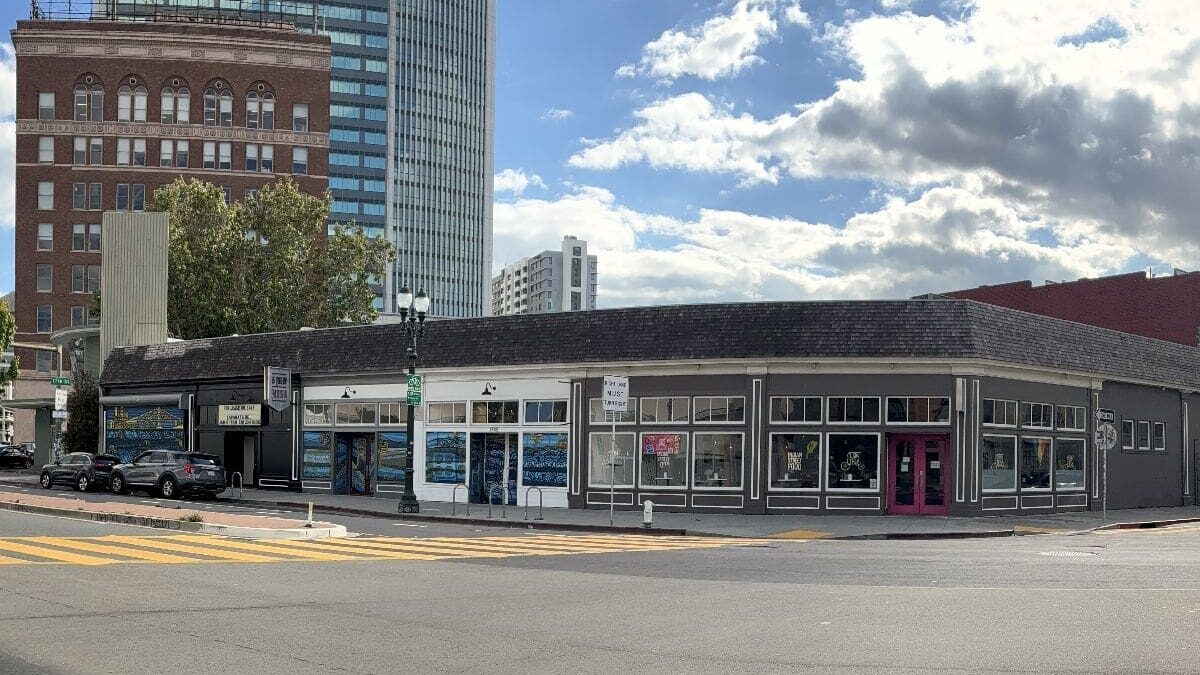
Oakland Theater Project has secured a 10-year lease, with an option to purchase, at 1743 San Pablo Avenue, the downtown address previously known as the New Parish and Sweet Jimmie’s. Announced October 22, the agreement gives the company a route toward a lasting home, though it is not a completed property purchase.
The plan reaches beyond OTP’s own productions. The company envisions a performing arts center with affordable rehearsal and performance rentals for other Bay Area artists and organizations. A phased transformation would prepare the space for audiences in 2027 and eventually create an approximately 200-seat theater with a thrust stage and balcony.
That distinction matters: this is a proposal for shared cultural space, not simply a change of tenant. Its promise lies in giving more artists somewhere to develop work and meet an audience. Construction and the future center remain ahead, but the lease establishes a concrete starting point for that ambition.
Bottom of the Hill gets a succession plan
Across the bay, Bottom of the Hill has a different kind of next chapter. After the San Francisco club’s owners announced plans to close, incoming proprietor Michele Bronson reached an agreement to take over the business. COYOTE’s October 22 reporting describes a lease beginning in January 2027, with Kathleen Owen and Ramona Downey retaining the building.
The news is a reprieve, not a promise that the doors will stay open without interruption. A temporary closure of at least a month is planned for code-related improvements. Bronson’s stated intention is to preserve the club’s independent character.
For a music venue, continuity involves more than keeping a name on the sign. The booking relationships, staff knowledge and audience habits accumulated over years are difficult to rebuild once dispersed. This handoff offers a chance to carry them forward while making necessary changes to the space.
New Work, Local Connections
Thao’s return draws on Bay Area creative friendships
Thao Nguyen, recording as Thao, is due to release Show Me on Friday, October 30. The Oakland-based musician’s first album in six years was co-produced with Merrill Garbus and Nate Brenner of Tune-Yards, according to The San Francisco Standard’s October 29 profile.
The local connections extend to the screen. The video for “Sick of the Times,” featuring the Linda Lindas, was filmed in the upstairs banquet room of San Francisco Chinatown’s Imperial Palace. A familiar gathering place becomes part of the work’s visual world rather than an anonymous backdrop.
The album also features Neko Case. Together with the Tune-Yards collaboration and the Chinatown video, those connections place Thao’s return within a wider creative circle rather than framing it only as a solo comeback.
MACLA’s youth media work gains a new partner
In San José, a new partnership with Logitech is drawing attention to the creative work already happening at MACLA’s Teen Tech Center. Metro reported October 21 on a gathering celebrating the relationship at the center, part of Movimiento de Arte y Cultura Latino Americana.
MACLA’s free youth programming includes photography, film, podcasting and music production. The center gives young people access to tools and support for making their own media, connecting an arts institution to forms of expression that can begin with a recording, a photograph or an edited sequence.
The center’s history includes an earlier Peapod Adobe youth-technology program and a 2020 partnership with Best Buy and The Clubhouse Network. Logitech enters an existing effort to connect young people with creative tools and mentorship, not a program starting from scratch.
Keeping Cultural Memory in Circulation
A Harlem gathering returns as living history (●)
Once Upon a Time in Harlem brings a remarkable 1972 gathering back into public view. Filmmaker William Greaves assembled artists and intellectuals from the Harlem Renaissance at Duke Ellington’s townhouse and filmed their conversation. The restored footage forms the heart of the documentary directed by his son, David Greaves.
Participants include painter Aaron Douglas, composer Eubie Blake and photographer James Van Der Zee. The film’s premise gives these figures more room than the usual historical caption: they can reminisce, disagree and consider the place of their work in a changing world.
48Hills reports that the film begins its Bay Area theatrical run October 30. Its arrival offers a way to encounter Black cultural history through the people who made it, with their differences and personalities intact. Preservation here means recovering a conversation, not freezing its participants into a single agreed-upon story.
New Dimensions works to restore an audio archive
The long-running New Dimensions radio project is working to make another kind of cultural record usable again. Founded in San Francisco in 1973, the program has built an archive of conversations about ideas, creativity and ways of living. Its current restoration appeal is organized by co-founder Justine Toms.
The project’s own description makes an important distinction: 692 recordings have been digitized, but still need restoration to become playable and publicly accessible. Copying a recording into a digital file does not, by itself, finish the preservation work.
A new October 27 Bohemian feature has brought the effort renewed attention, but the campaign itself began earlier this year. The materials reviewed do not announce completion of this 692-recording restoration project.
Looking back at Nexus, beyond a single art week (●)
Nexus: SF/Bay Area Black Art Week ended October 4; it is not an upcoming event. A newly published Travel Noire reflection, updated October 24, offers a reason to revisit what the gathering connected across the region.
The account follows a network of Black artists and cultural spaces, including Oakland’s home-based Streetlight Gallery. In the Marin Headlands, Salimatu Amabebe’s Black Feast brought food and performance together at Headlands Center for the Arts, with work by Oakland-based artist Gabriele Christian.
Those encounters connect a residential gallery, an arts campus and a meal conceived as an artwork. They also give the retrospective a wider regional frame than a tour of San Francisco museums alone.
For practical plans alongside these cultural developments, see the BAR Weekly Roundup for October 25–November 1 and the BAR Picks calendar. Check the presenting organization’s latest information before making plans.
About Culture Now
Culture Now looks at the people, places and developments shaping Bay Area arts and culture, with attention to Black cultural life across the region. This edition focuses on San Francisco, the East Bay, San José and North Bay connections; it is not a comprehensive survey of every Bay Area community. Connecting observations are BAR editorial analysis based on the reporting and primary sources linked throughout.
Reporting and source review are current as of October 29, 2026. Future openings and plans remain subject to change.