




From an AI-powered choir in San Francisco to creative entrepreneurs in Oakland, a different technology story is taking shape around access, ownership and the people behind the tools.
A choir with a computing bill is an unusually good place to begin a conversation about Bay Area technology.
For a project developed for San Francisco’s Gray Area, artist and composer Iana Chugunova invited people to sing with nine language models. Her starting point was Pauline Oliveros’s Tuning Meditation, a 1971 score built around listening. In Gray Area’s description of the project, each machine voice has a budget, and its computing time spends that money. When the budget runs out, the voice stops permanently.
That premise makes something normally hidden feel tangible: digital experiences depend on resources, and somebody decides who gets them.
It is also a useful starting point for BAR’s new technology column. The Bay Area’s technology story belongs to the people who live with its consequences, as well as the people who develop its products. We are interested in what those tools make possible, what they demand of us and who gets a meaningful role in shaping them.
From a Prompt to a Working System
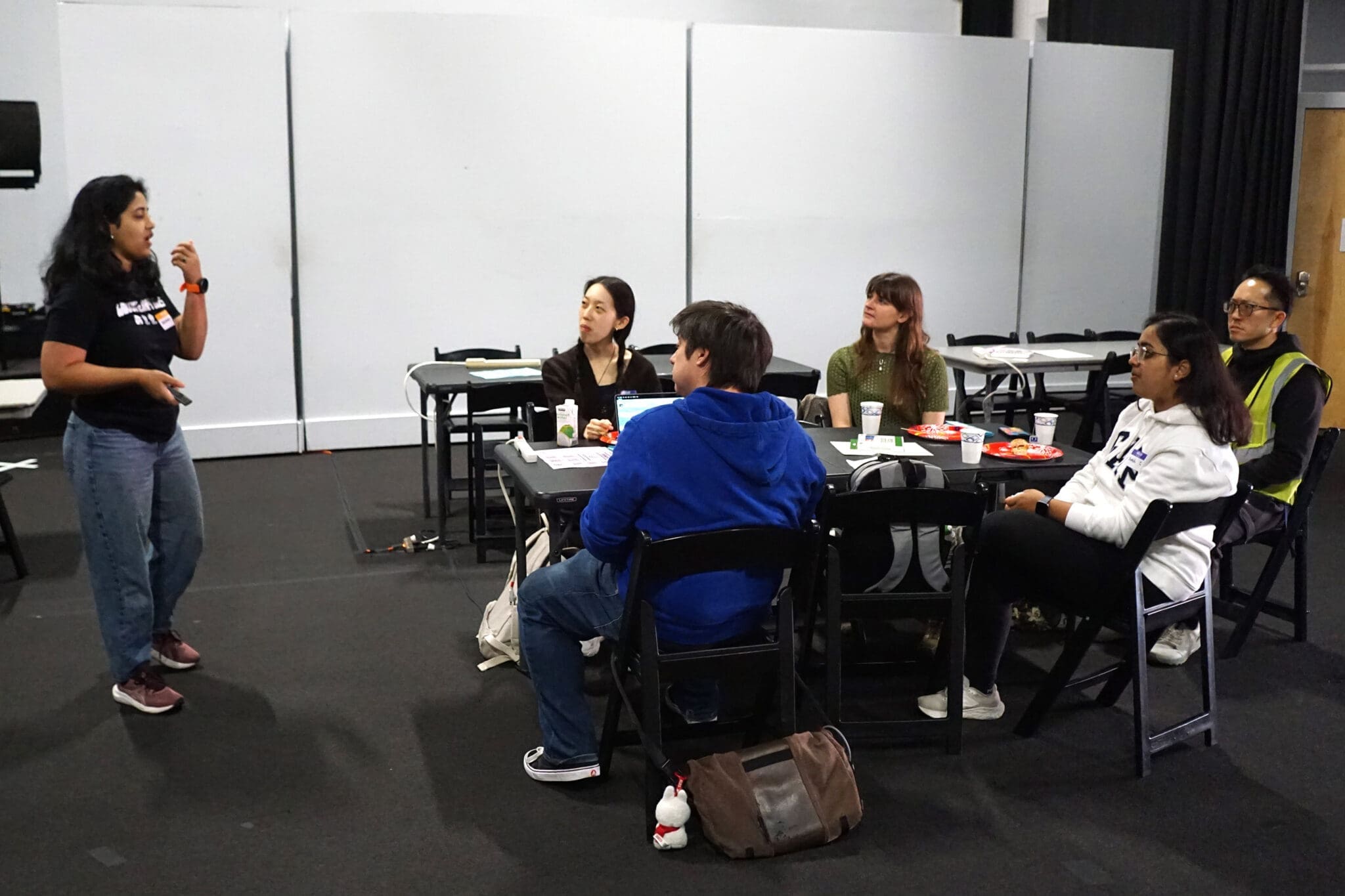
Chugunova is among the participants in Scaling Intelligence, a collaboration between Gray Area and cloud-computing company Modal. The exhibition, running October 28 through November 1, brings together 13 artists and 11 commissioned projects at the Grand Theater in the Mission District.
The collaboration goes beyond handing artists a chatbot subscription. Its open call offered selected artists a $2,000 honorarium, up to $20,000 in Modal computing credits and up to $5,000 in materials and production support. Those are resources for developing work, not evidence that every project spent the maximum.
“Cloud computing” can sound abstract. In practical terms, Modal’s documentation describes a service that runs a creator’s code on remote computers, with charges based on usage. It supports tasks including running and adapting AI models. The artist does not need to own all that hardware, but the underlying computation still has a cost.
For anyone experimenting with a business idea, an interactive website or a creative project, that distinction matters. Making a convincing demonstration and keeping a useful service running are different challenges. A project needs a purpose, a way to pay its bills and someone responsible when it behaves unexpectedly.
The exhibition offers a place to consider those questions without needing to become an engineer first. It also provides a reminder that an AI system can be designed around listening and participation, rather than simply producing more material.
Oakland’s Question: Who Owns What Comes Next?

Across the bay, HiiiWAV approaches creative technology through entrepreneurship. The Oakland incubator combines technical assistance with business development, workspace and mentorship. Its focus is on helping artists build ventures, rather than leaving them only as customers of somebody else’s platform.
The organization describes itself in its 2024 impact report as Black-led, with a mission rooted in ownership and opportunity for historically marginalized artists. That African American perspective adds an essential question to the region’s technology conversation: when cultural knowledge helps create a valuable product, do the people contributing it have a stake in the business?
HiiiWAV’s current roster makes the connection concrete. It identifies Ryan Nicole, an artist and co-founder of Co-Founders The Musical, as the founder of worth.ai and a participant in its AFRO AI MVP incubator. It also describes Kev Choice and Sam Wilkins’ Choice Scores as a joint venture supporting Black artists’ innovation.
These examples do not establish that every venture will succeed. They show artists taking on a different role: developing businesses and helping determine how technology is used. The distinction deserves attention alongside the region’s more familiar stories about funding rounds and product launches.
A Useful Test for the Next Big Thing
For readers, the practical takeaway is to look past the demonstration. What problem does a tool solve? What must you contribute, whether money, personal information or creative work? Can you take your work elsewhere? Who remains accountable for the result?
Those questions apply to a musician developing a new product, a neighborhood business testing automation or a parent evaluating a learning tool. Curiosity and scrutiny can coexist. A striking result is worth exploring; it does not remove the need to understand the arrangement behind it.
That is the territory this column will explore: Bay Area technology through the lives, work and ambitions of the people here. The newest tool may attract the attention. What people can build with it, and what they retain, will be the more lasting story.
See it: Scaling Intelligence is free at Gray Area, 2665 Mission Street, San Francisco. Remaining gallery hours are Friday, October 30, 2–8 p.m.; Saturday, October 31, and Sunday, November 1, 1–8 p.m. Check the official exhibition page for current visitor information.